Nazaré Surf Club · Ocean knowledge
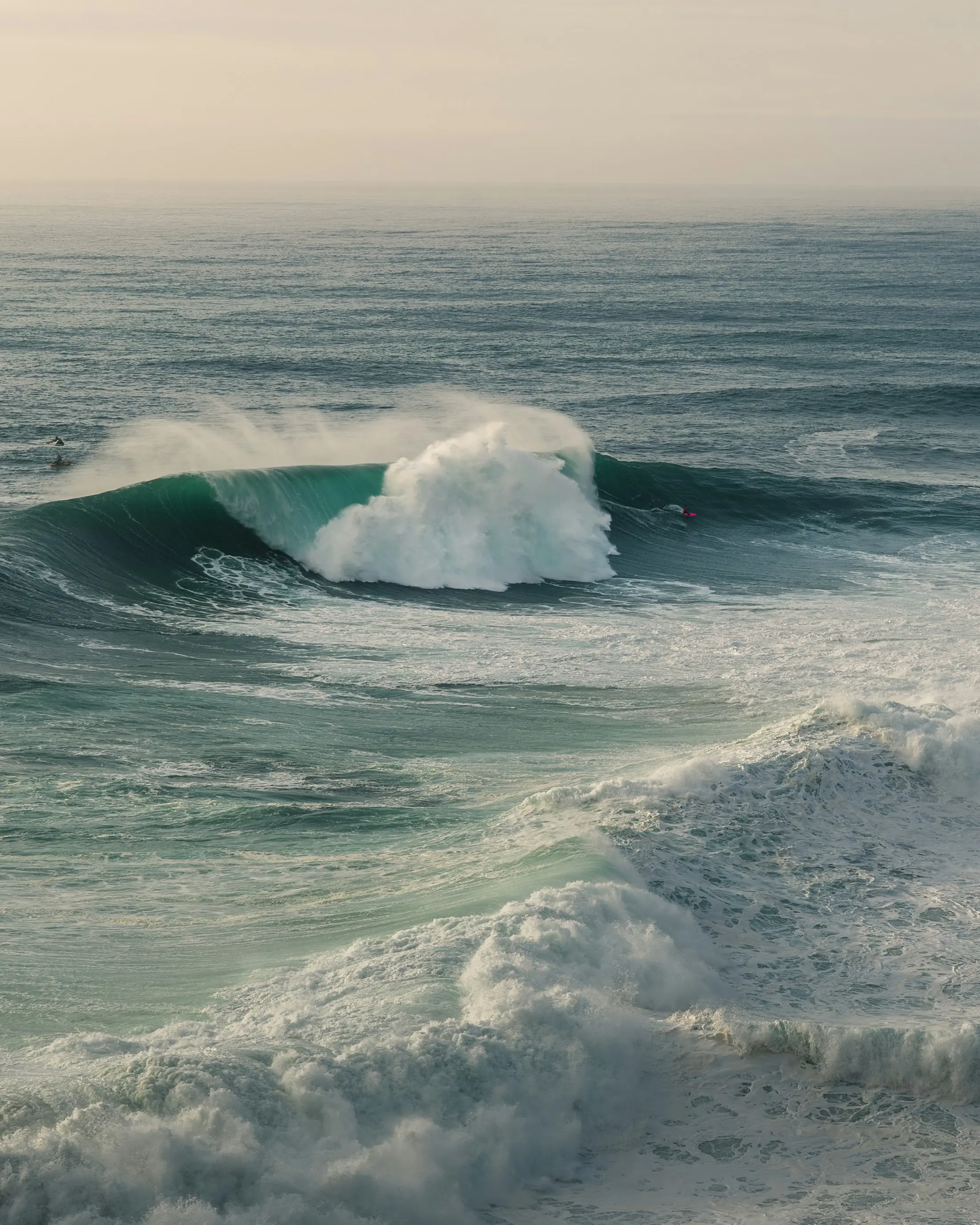
Few waves are as iconic as Praia do Norte, Portugal’s XXL wedge that towers over all other big wave spots on the planet. The mystique of the gargantuan peak breaking off the coast of Nazaré is undeniable, and draws an assortment of the world’s best watermen and women each winter when NW swells start to stack up in the Atlantic. But how exactly does Nazaré’s most famous attraction work, and why is it so much more impressive than any other wave on the planet?
Praia do Norte has produced numerous world records for biggest wave ever towed, and will likely maintain its dominance for the foreseeable future. Not only have the biggest waves in history broken in front of Nazaré’s infamous farol, but they continue to do so every year. Nowhere else on the planet breaks as consistently big—or as big, period—and that’s all because of a specific combination of factors that are unique to this small stretch of beach.
The ocean floor
What makes Nazaré break the way it does
The first ingredient that helps Nazaré get so huge is that the coast of Portugal faces straight into the north Atlantic, one of the largest swell-generating bodies on the planet. Violent storms blow toward Portugal all winter long, buffeting the coast with huge and often unruly swells. But those swells don’t just hit Nazaré. They also hit the rest of Portugal, as well as France and Spain. So why are they so much bigger at Praia do Norte?
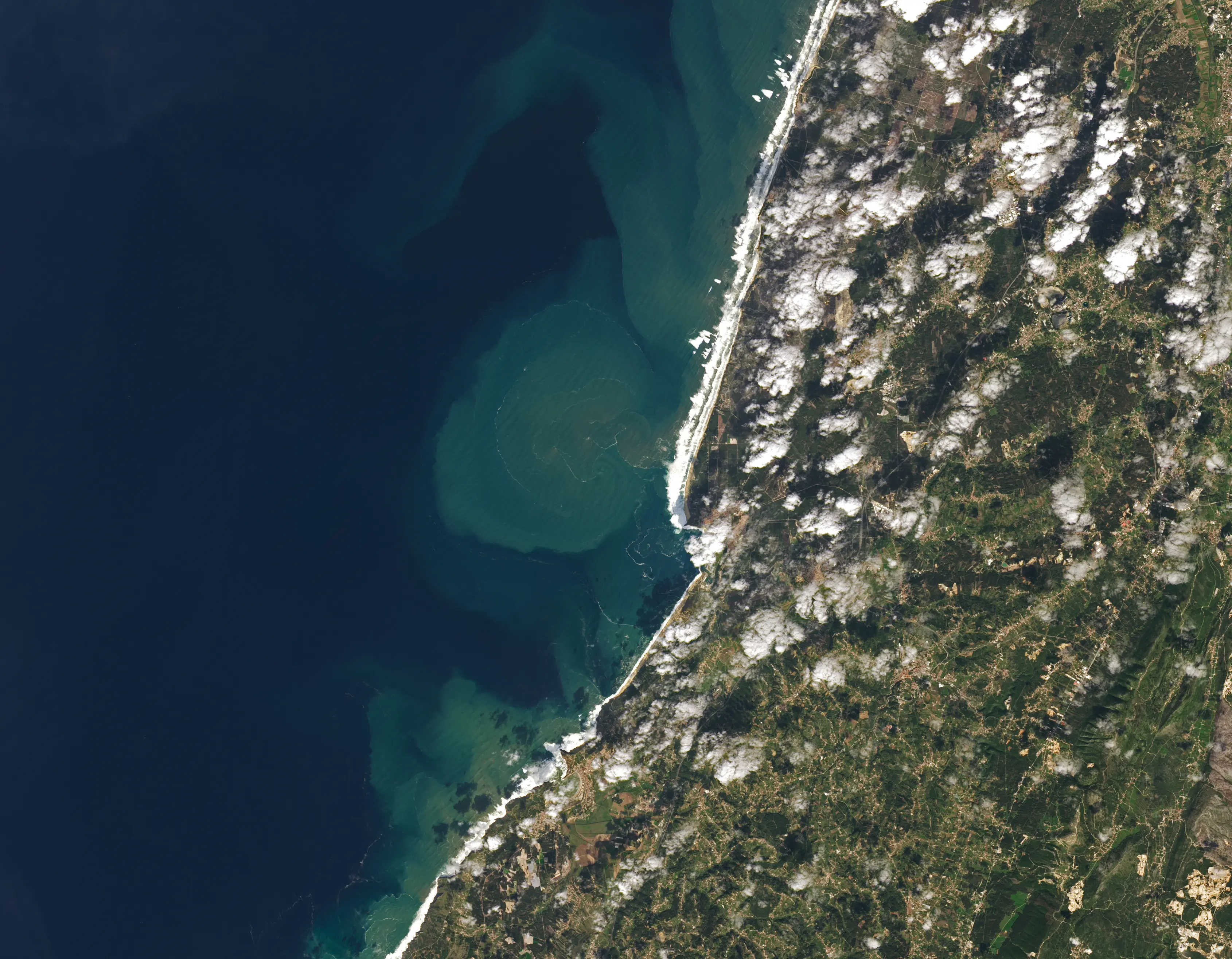
One important thing that Nazaré has going for it is that it faces west/northwest—straight into the fetch of the arriving swells. Thus, it receives the full brunt of any waves that pour in from the north Atlantic. But that’s not enough to create the world’s biggest wave. In addition, this exposure is magnified by a unique quirk of bathymetry that creates something called constructive interference—an X factor that also affects waves such as Puerto Escondido in Mexico and the Wedge in Southern California. The difference, however, is that in Portugal that interference affects supersized northwest swells instead of relatively moderate south swells.
The ocean floor
The Nazaré Canyon
Located off the coast of Nazaré is the Nazaré Canyon—the largest underwater canyon in Europe, and one of the biggest anywhere in the world. This canyon points toward the coast near Praia do Norte, and unlike most other underwater canyons around the world, it terminates close to shore. It also goes from extremely deep (around 5,000 meters where it empties into the Abyssal Plain 210 kilometers off the coast) to relatively shallow (around 50 meters) at its head near Praia do Norte.
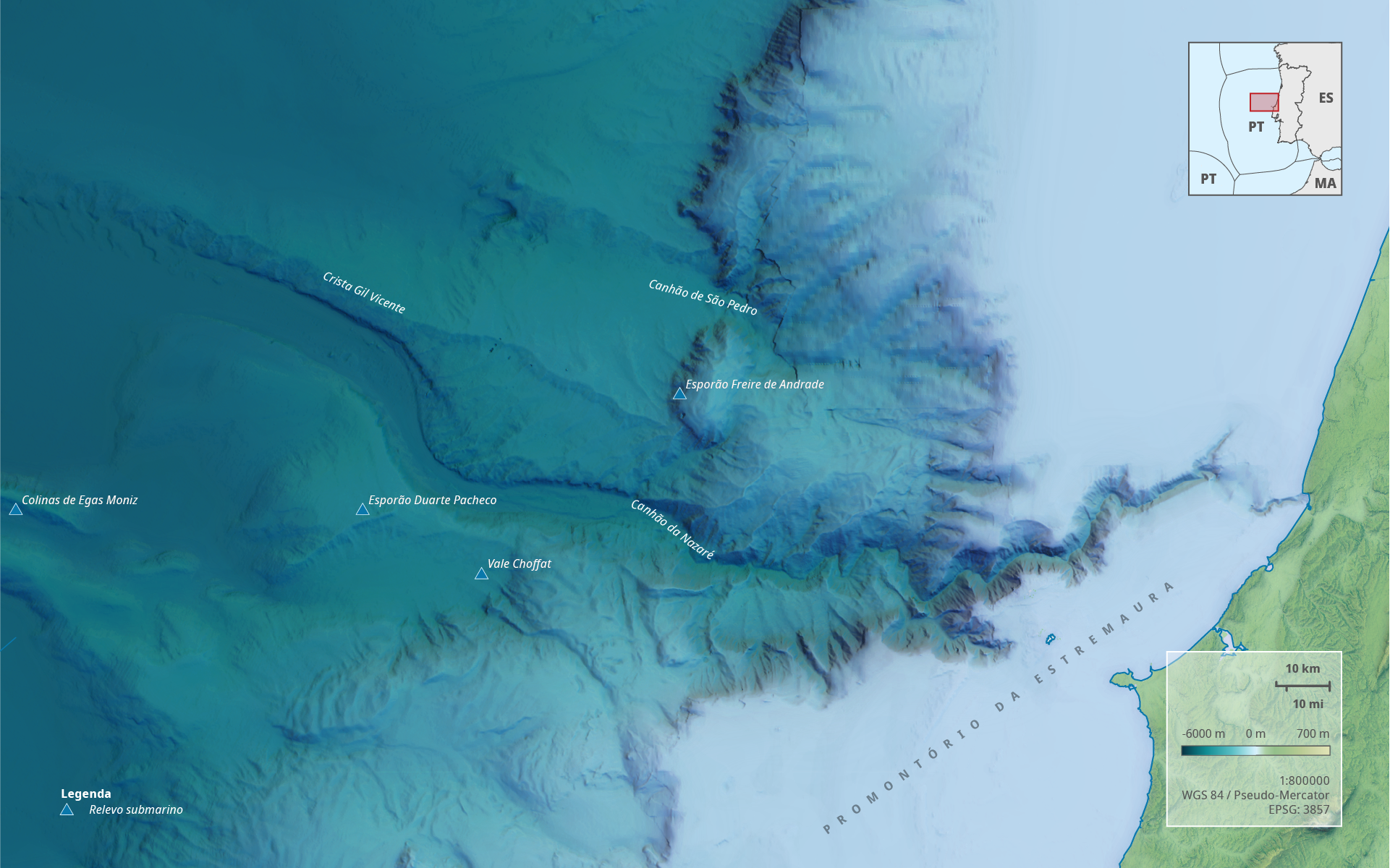

The effect of this canyon on the swell at Nazaré is twofold. First of all, swell that is pushing toward shore directly through the deep canyon does not feel the bottom of the ocean until it gets quite close to the coast. This allows the swell to move toward shore very quickly, where it suddenly encounters shallower water, resulting in rapid and abrupt shoaling. (Shoaling is when an approaching wave feels the bottom of the ocean and stands up taller due to the lower part of the wave slowing down while the upper part continues to move quickly. The more abrupt the change in ocean depth is, the more aggressive the effects of the shoaling.)
By itself, the rapid dropoff between the coast and the canyon would be enough to create a large, steep wave that jacks up quickly. But the canyon has a second effect that is just as important—and counterintuitively, it involves the swell also slowing down. As a line of swell approaches the canyon, the part that passes directly over the canyon continues unimpeded toward shore, as we have discussed previously. However, long-period swells influence water well below the ocean’s surface and on either side of the canyon, they begin to feel the relatively shallower ocean bottom. This causes the swell on either side of the canyon to slow down and bend in different directions, effectively creating three different swells—one that is moving directly through the canyon at high speed, and two that are moving more slowly and in different directions (still toward Praia do Norte, but at an angle rather than in a straight line).
These broken up swells hit the coast at different times due to the different speeds they are traveling. The swell moving through the canyon hits first, while the slower swells hit late. However, while the faster swell approaches the coast, it is likely to interact with slower-moving swells from an earlier set, which are approaching at the same time at an angle. When two swells intersect at the right time (that is, during the aggressive shoaling action, when they are about to break), their energy combines to create a huge wedge—basically a giant peak that’s twice as big as a normal wave produced by the same swell.
| Submarine feature | Nazaré Canyon (Canhão da Nazaré) |
|---|---|
| Total length | Approx. 210 km from the Abyssal Plain to Praia do Norte |
| Depth range | ~5,000 m offshore rising to ~50 m near the canyon head |
| Wave amplification mechanism | Deep-water swell travels faster through the canyon, shoals abruptly, and converges with refracted shelf swell |
| Main lineup peaks | Peak One (closest to cliffs), Peak Two, Peak Three, and Big Mama (outer reef) |
| Headland landmark | Fort of São Miguel Arcanjo (built 1577; lighthouse installed 1903) |
Inside the lineup
Shifting peaks and tow-in surfing
Because there are numerous waves approaching Praia do Norte from different directions at different times—and interacting with other waves almost at random—the lineup can be quite unpredictable, and has multiple peaks that can pop up without warning. Peak One, Peak Two, and Peak Three break up and down the beach (with Peak One nearest to the lighthouse and Peak Three being farthest up the coast), while “Big Mama” breaks even farther out (almost directly out from the lighthouse) on particularly massive swells.
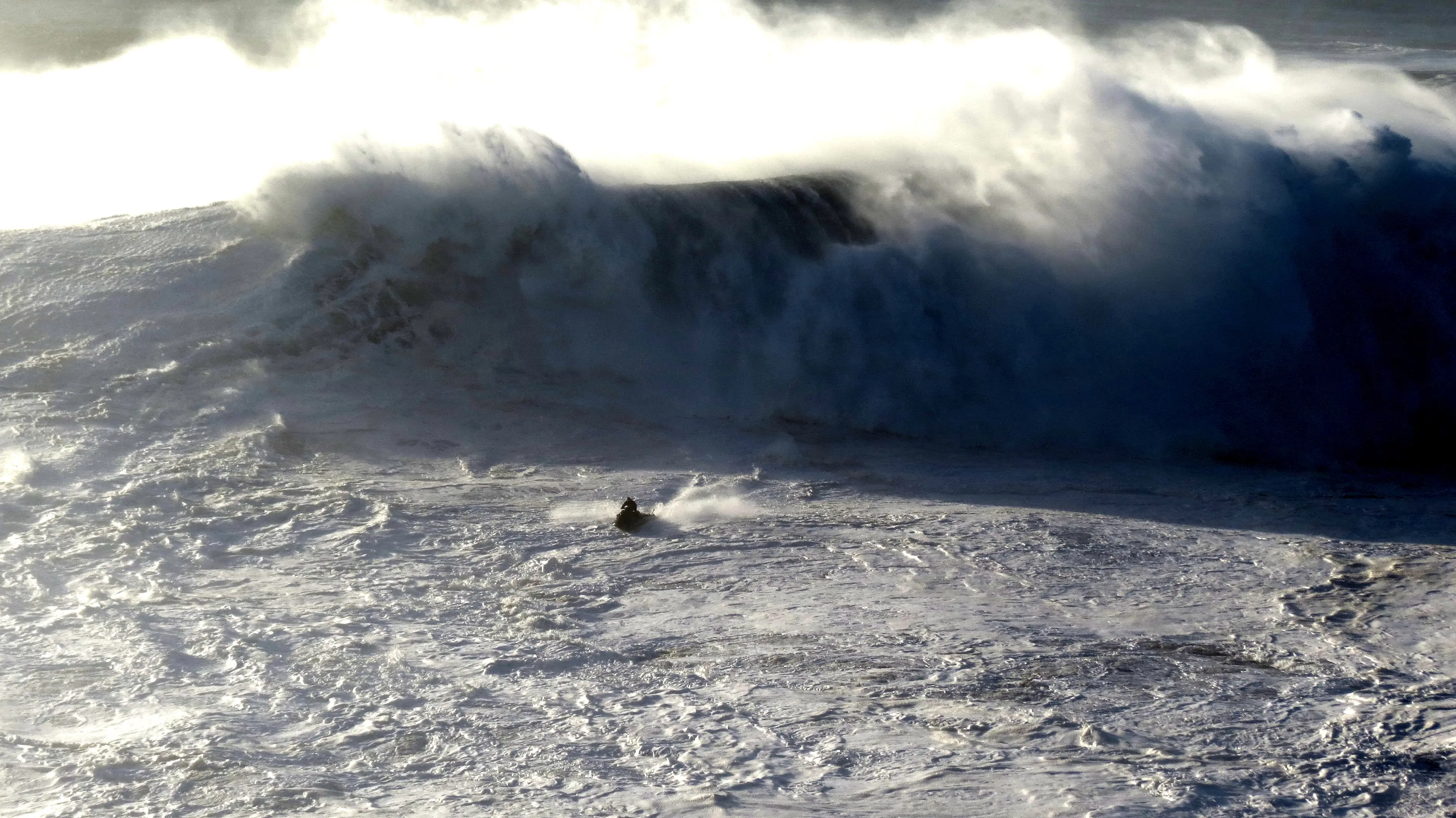

Because the lineup is so unpredictable and huge peaks shift all over the place, Nazaré can be a very difficult wave to paddle. Not only is it difficult to be in position to catch a breaking peak, but paddlers are also likely to take rogue waves on the head, even when sitting on what only minutes before was the shoulder or channel. This is why the majority of the surfing at big Nazaré is done from behind a jet ski (although there have been some monumental paddle waves over the years).
In summary, Nazaré is basically a wedging beach break, just like hundreds of others around the world—except it operates on an enormous scale that no other wedge could ever aspire to.
The headland
The stadium factor
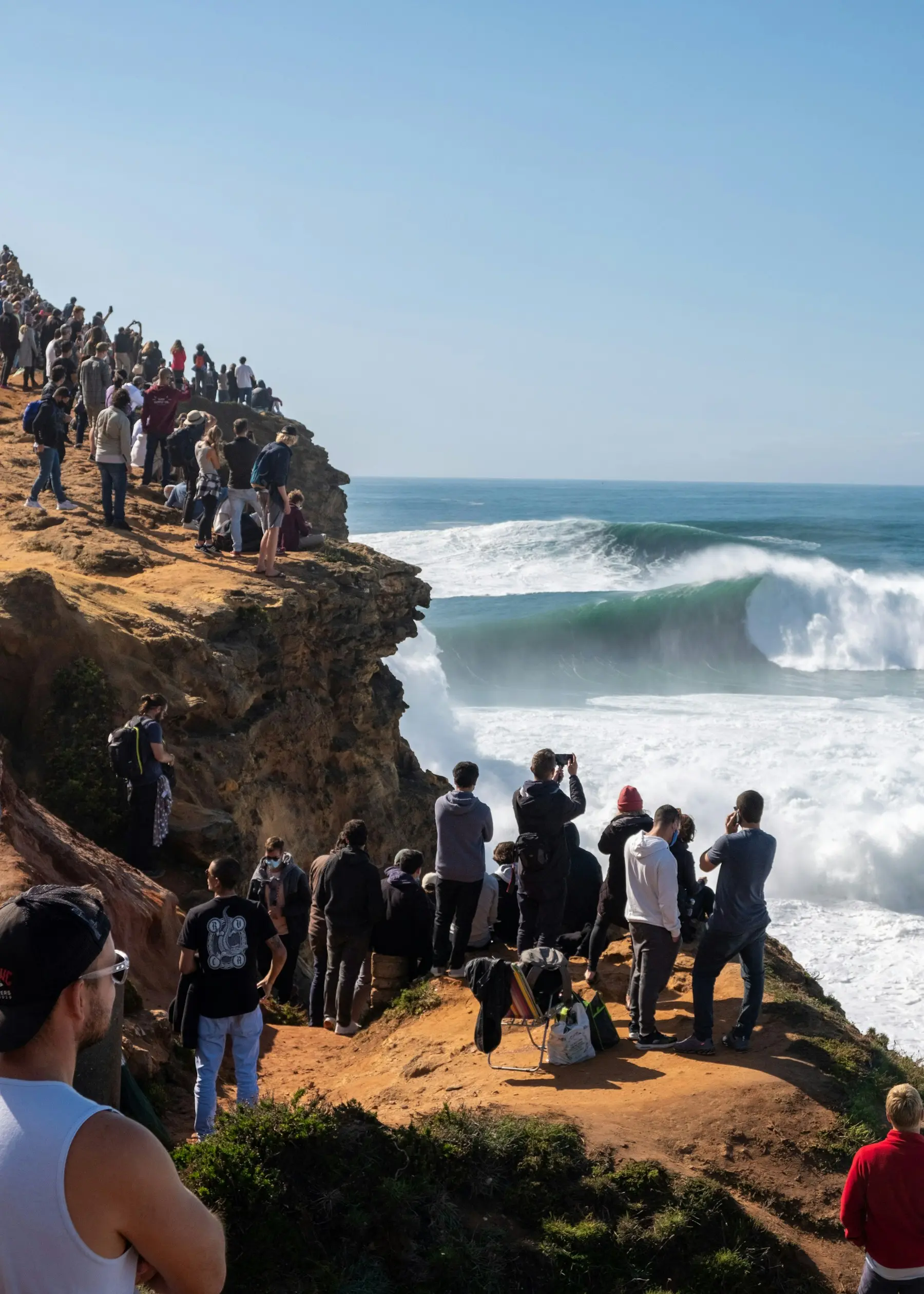
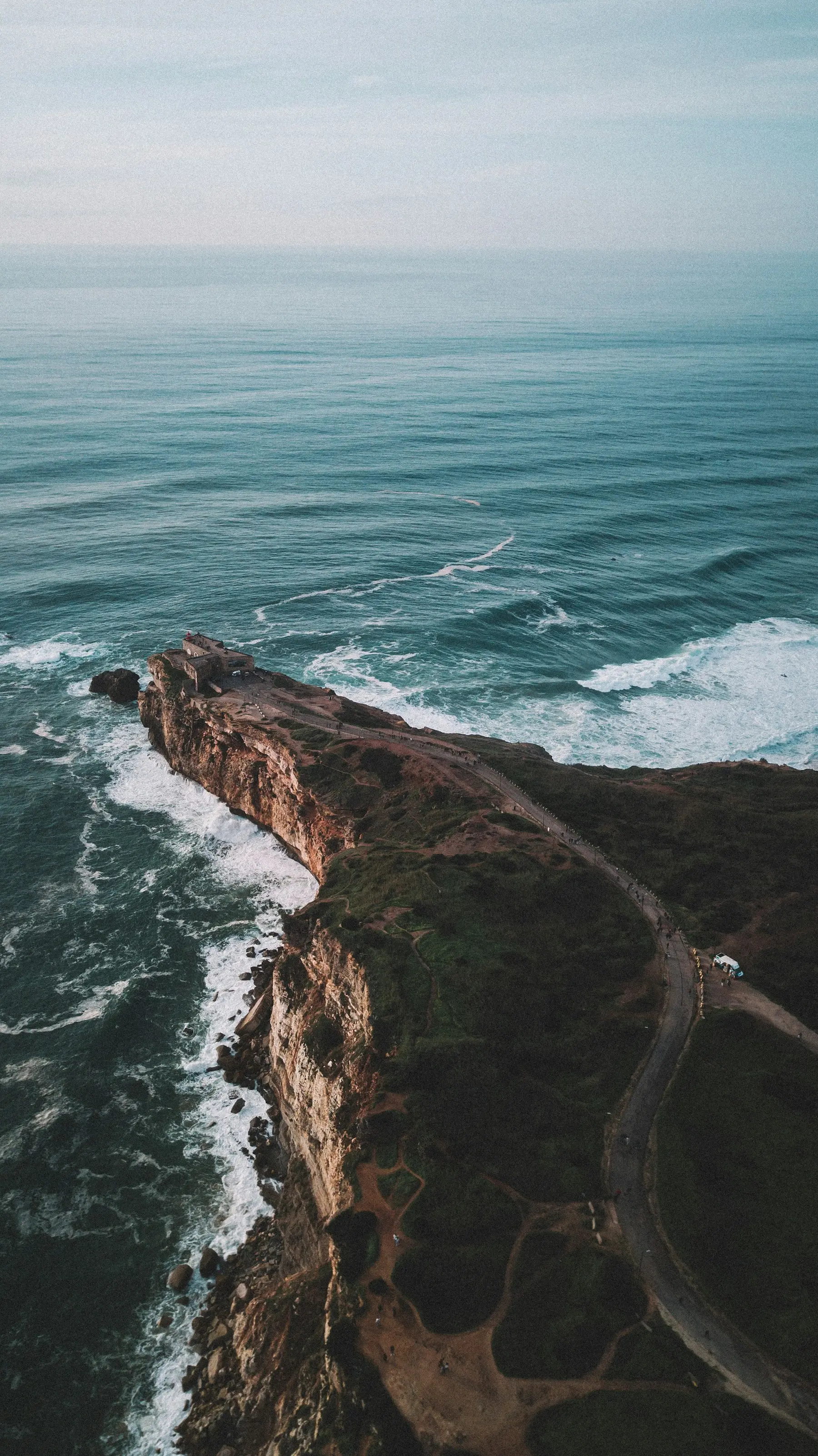
Even if it broke in the middle of nowhere, the wave at Nazaré would be one of the most incredible spectacles in surfing. But the fact that it breaks just offshore from an iconic lighthouse (“farol,” in Portuguese), on a cliff where thousands of people can stand a few dozen meters away from the action—even getting splashed by the same waves they are watching people surf—makes it a truly unique stadium.
History on the headland
The Fort of São Miguel Arcanjo
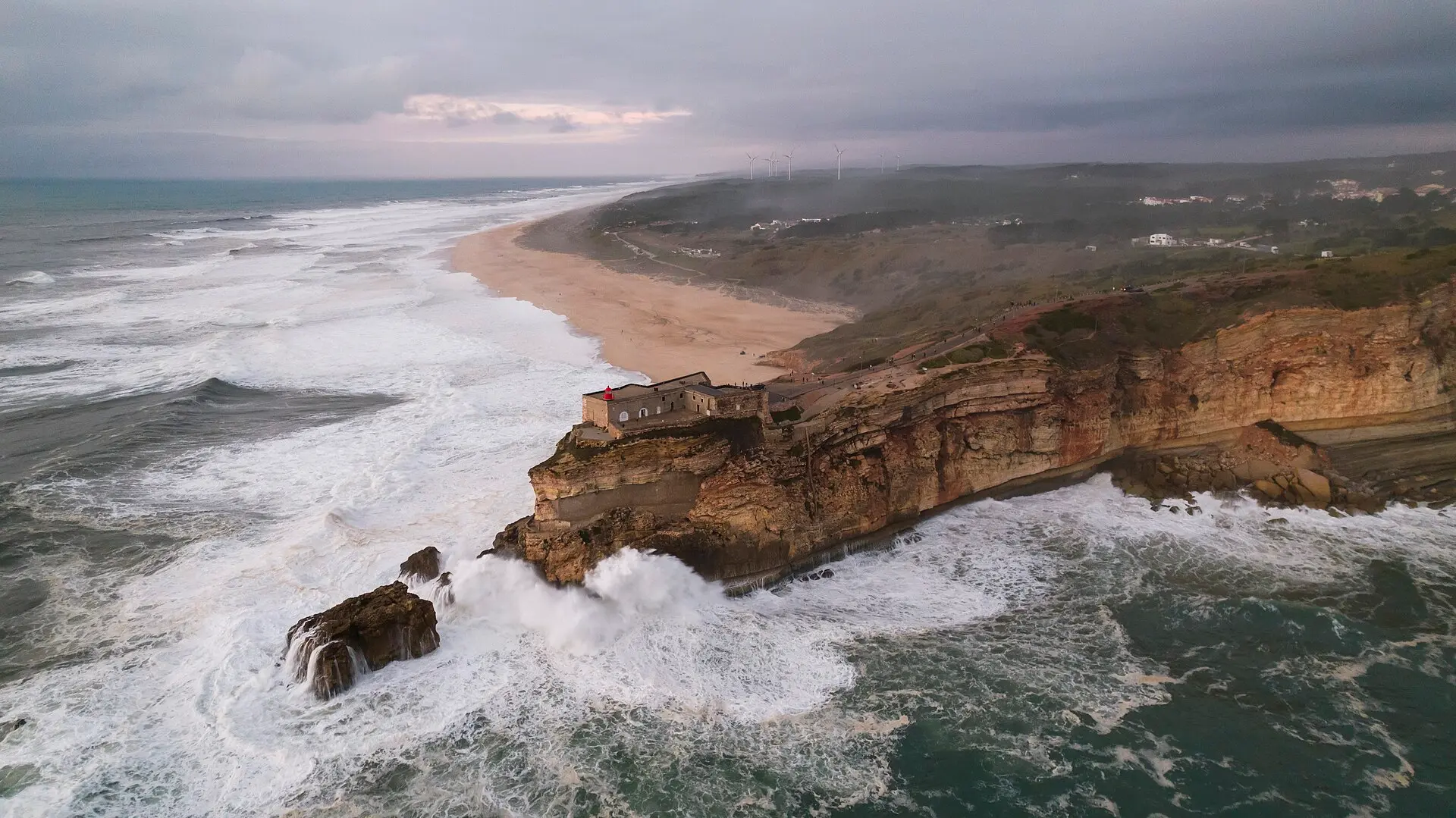

The Fort of São Miguel Arcanjo (St. Michael the Archangel) was originally built on the cliffs of Nazaré to protect the coast and local boats from pirates. In 1644, King John IV expanded the fort, added limestone walls, and installed a carving of St. Michael. The fort was occupied by Napoleon’s men during the Peninsular War in 1807, but they were eventually outsmarted and locked up by the local townsmen and students. Then, in 1903, the iconic red lighthouse was added to guide and protect ships and fishermen.
Today, the Fort of São Miguel Arcanjo houses a museum celebrating the huge swells of Nazaré and the surfers who ride them. It has become one of the most popular attractions in Portugal—an incredible intersection of local history, surfing culture, and the power of the world’s biggest waves.